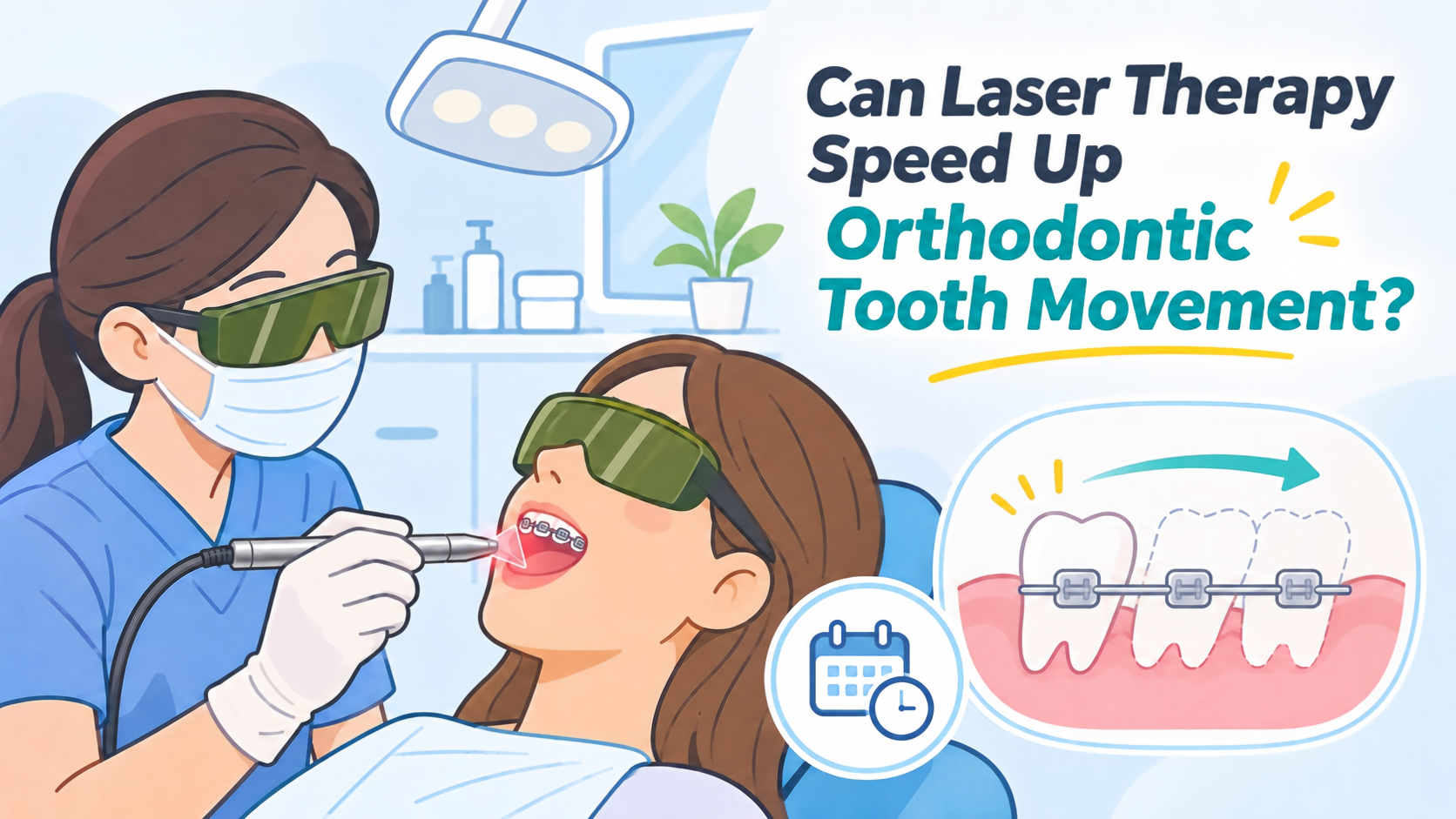
Can light help teeth move faster during orthodontic treatment? Photobiomodulation (PBM), also known as low-level laser therapy (LLLT), is gaining attention as a potential way to support tooth movement. Let's explore how it works, what clinical studies have found, and how dental professionals are putting this technology into practice.
Key Takeaways
Supporting Tooth Movement: PBM uses light energy to influence biological processes involved in orthodontic tooth movement.
Promising Research Findings: Some clinical studies suggest that PBM may help teeth move faster, although results vary and further research is needed.
-
Clinical Applications: A PIOON dental customer has shared practical experience using dental diode laser technology in light-assisted orthodontic procedures.
Contents
How Does Photobiomodulation Affect Orthodontic Tooth Movement?
What Does Clinical Research Say About PBM and Tooth Movement?
Does PBM Help With Orthodontic Pain and Discomfort?
Exploring PBM Applications with PIOON Dental Lasers
Conclusion
FAQ
References
How Does Photobiomodulation Affect Orthodontic Tooth Movement?
Orthodontic tooth movement (OTM) occurs when mechanical forces are applied to teeth, producing biological responses in the periodontal ligament and surrounding alveolar bone.
On the compression side, osteoclast-mediated bone resorption allows tooth movement. On the tension side, osteoblast activity contributes to new bone formation. These coordinated processes are essential for controlled tooth movement.
Photobiomodulation uses light energy to influence cellular activity without relying on tissue ablation or significant thermal effects.
When appropriate light reaches biological tissues, it may interact with cellular photoreceptors, including components of the mitochondrial respiratory chain. This interaction can influence cellular signaling, energy metabolism, and processes associated with tissue repair and remodeling.
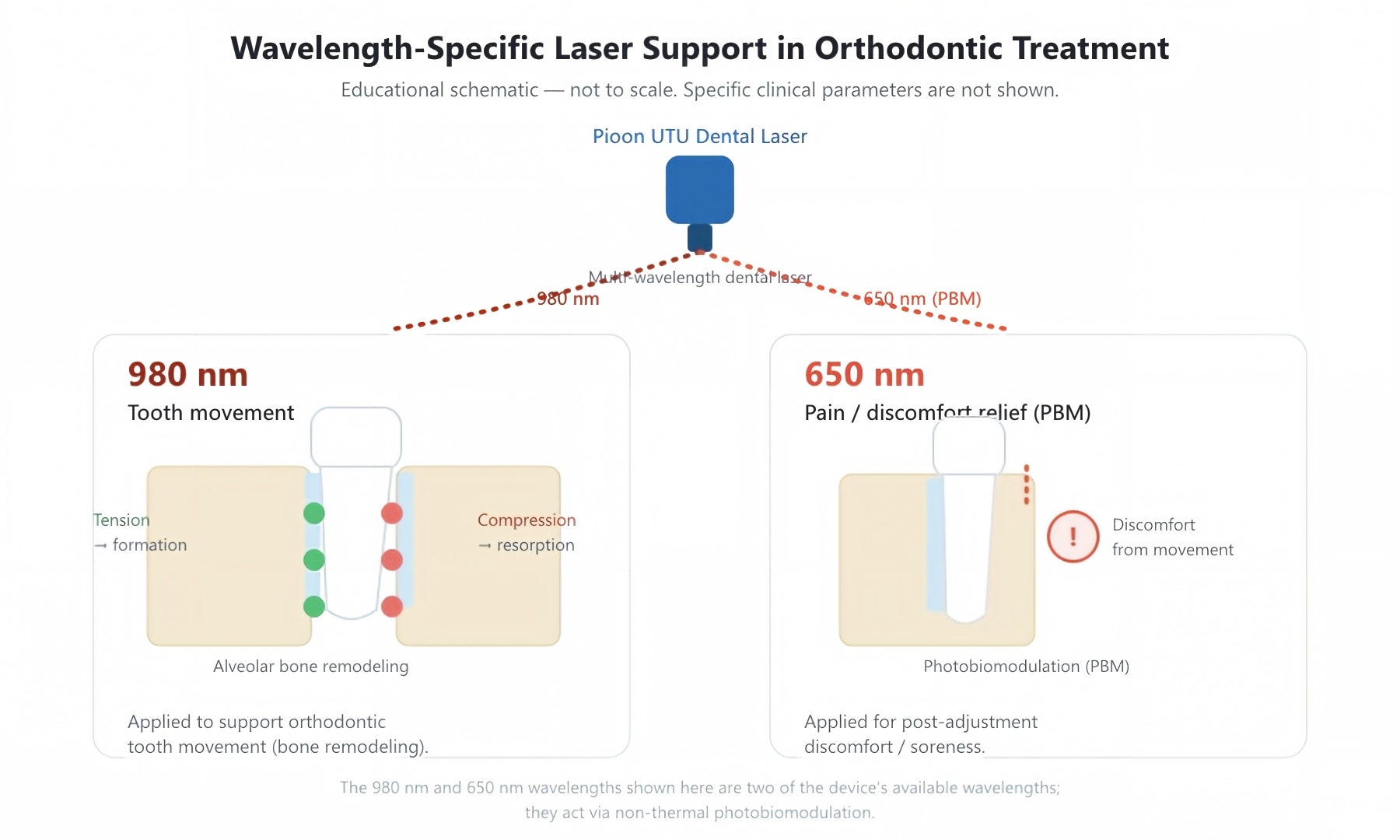
Experimental research suggests that PBM may affect several biological activities relevant to orthodontic tooth movement:
- Cellular metabolism: PBM may influence mitochondrial activity and cellular energy production.
- Bone remodeling: Light-induced biological responses may affect osteoblast and osteoclast activity.
- Periodontal tissue responses: PBM may influence cellular signaling within tissues involved in orthodontic movement.
These mechanisms provide a biological rationale for investigating PBM as an adjunct to conventional orthodontic treatment.
What Does Clinical Research Say About PBM and Tooth Movement?
Over recent years, clinical researchers have investigated whether photobiomodulation can increase the rate of orthodontic tooth movement.
A systematic review by Gonçalves and colleagues, published in *Orthodontics & Craniofacial Research* in 2025, examined clinical and preclinical evidence relating to PBM and orthodontic tooth movement.
The review identified promising biological effects and potential benefits for tooth movement. However, it also highlighted considerable differences among treatment protocols and reported outcomes, making it difficult to establish consistent clinical conclusions.
A broader overview published in Odontology in 2026 evaluated 40 systematic reviews covering 134 primary studies and 4,730 participants.
Its analysis of selected studies with a low risk of bias suggested that PBM could produce a modest increase in orthodontic tooth movement, approximately 1 mm over three months in the evaluated setting.
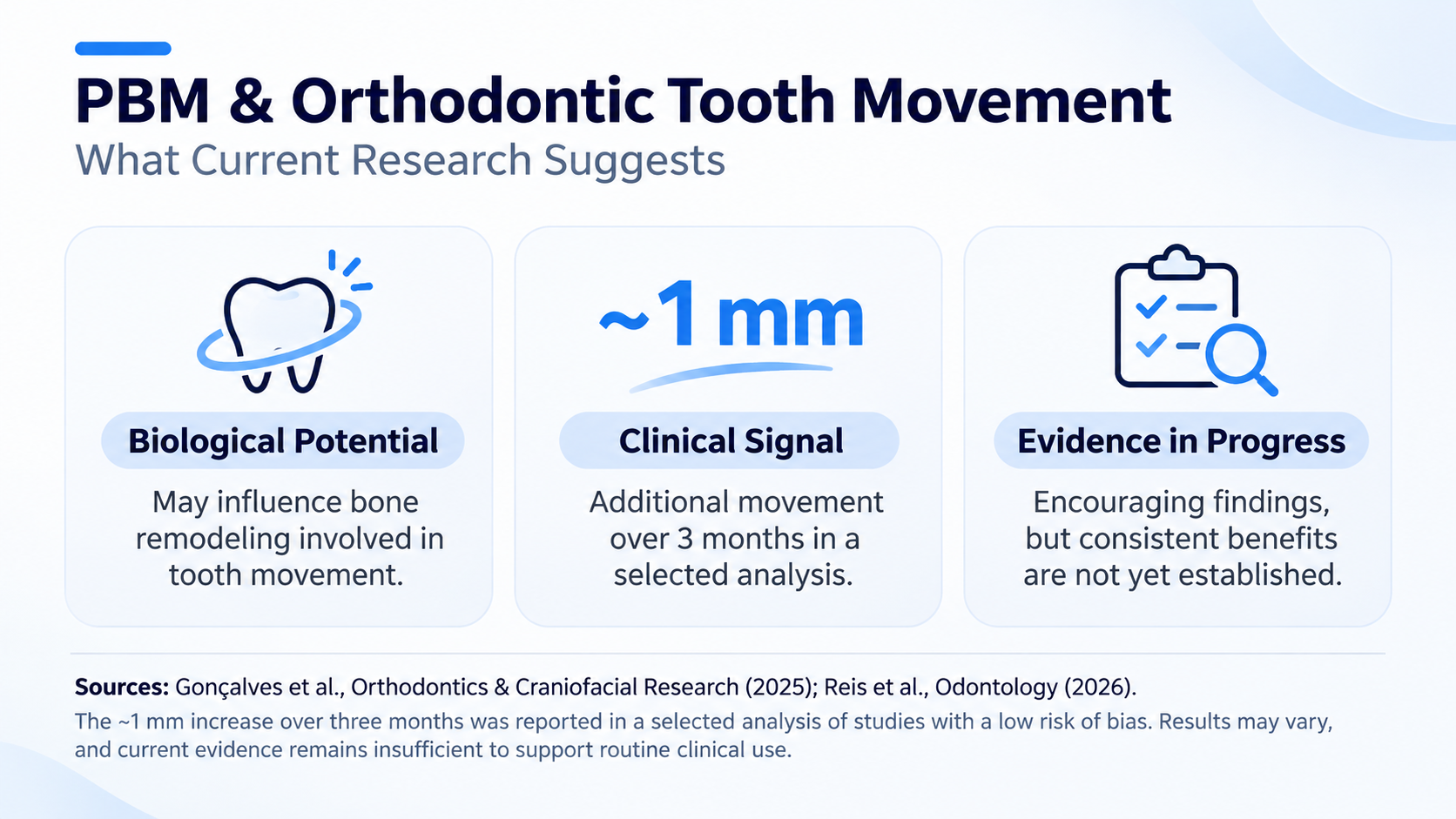
While these findings are encouraging, researchers also highlight some important challenges. Clinical studies use different treatment methods and evaluation standards, making it difficult to compare results and determine how consistently PBM may benefit orthodontic patients.
A 2026 overview of systematic reviews found that PBM may offer modest improvements in tooth movement under certain conditions. However, the available evidence is not yet strong enough to support its routine clinical use.
What Does This Mean for Orthodontic Practice?
PBM shows potential as an adjunct to conventional orthodontic treatment, with some studies reporting measurable improvements in tooth movement.
For orthodontists, these findings offer an interesting direction for exploring light-assisted treatment. As clinical research continues, a clearer understanding of its benefits and appropriate applications may help guide future orthodontic practice.
Does PBM Help With Orthodontic Pain and Discomfort?
Accelerating movement is only one reason clinicians explore PBM. A second — and for many patients a more immediate — question is whether light therapy can reduce the pain and discomfort that follow orthodontic adjustments.
Tooth movement provokes an inflammatory response in the periodontal ligament, and the resulting soreness is one of the most common reasons patients, especially children and adolescents, find treatment unpleasant or intermittently abandon aligner wear.
Several reviews have examined PBM for orthodontic pain. The 2026 umbrella review by Bukhari and colleagues (*BMC Oral Health*), cited above, evaluated pain among its outcomes alongside tooth movement, root resorption, and bone biomarkers. Other clinical investigations have reported that PBM applied around the time of adjustments may be associated with reduced reported discomfort, although — as with tooth movement — the certainty of the available evidence is generally low and study protocols vary widely.
In the customer-shared clinical materials described in the next section, PIOON's dental customer also highlighted reduced discomfort during tooth movement as a preliminary observation.
The practical takeaway mirrors that for tooth movement: PBM is a plausible, non-invasive option worth further study for orthodontic comfort.
Exploring PBM Applications with PIOON Dental Lasers
PIOON has received clinical application materials from a Japanese dental customer describing the use of PIOON dental diode laser technology in light-assisted orthodontic procedures.
The shared materials cover both early orthodontic treatment and adult orthodontics, focusing on supporting tooth movement and managing treatment-related discomfort.
In the customer's clinical experience, two cases showed approximately 15% and 50% faster tooth movement, respectively. The customer also reported reduced discomfort during orthodontic treatment. These preliminary observations reflect individual clinical experiences, and results may vary between patients.
The customer demonstrated the use of a dedicated treatment handpiece for light delivery in the oral cavity, showing how diode laser technology can be integrated into orthodontic workflows.
This practical experience highlights the potential of PIOON dental lasers in emerging orthodontic applications and offers valuable insights for dental professionals exploring photobiomodulation.
Conclusion: A Promising Research Direction That Requires Further Evidence
Photobiomodulation offers a promising approach to supporting orthodontic tooth movement, with clinical research suggesting potential benefits under certain conditions. Although further evidence is needed to establish consistent outcomes, PBM remains an area of interest in orthodontic research.
The clinical experience shared by PIOON's dental customer provides a practical example of how diode laser technology is being explored in orthodontic procedures. By combining clinical insights with dental laser solutions, PIOON aims to support dental professionals in exploring the potential applications of photobiomodulation.
Interested in the clinical protocol and application research behind PIOON dental lasers?
Request the PIOON clinical brief — covering protocol parameters, irradiation sites, and case documentation — or book a product demonstration with our team.
FAQ
Can photobiomodulation make braces or aligners work faster?
Current systematic evidence suggests PBM may produce a modest increase in tooth movement (roughly 1 mm over three months in one low-bias analysis), but meaningful reductions in total treatment time have not been established.
Does laser therapy reduce orthodontic pain?
PBM has been widely studied for post-adjustment discomfort. Reviews such as the 2026 BMC Oral Health umbrella review examined pain as an outcome. Some studies report reduced discomfort, but evidence certainty remains low, and protocols differ.
Is photobiomodulation safe for orthodontic patients?
PBM/LLLT is a non-invasive, non-thermal approach with a generally favorable safety profile in studied settings. Standardized safety data across protocols are limited, so treatment should be performed by trained professionals following device-specific guidance.
What is the treatment protocol (wavelength, power, frequency)?
Protocols — wavelength selection, output power, exposure time, irradiation sites, and frequency — vary by device and clinical scenario and are defined by the manufacturer's professional guidance. PIOON provides its clinical protocol brief to qualified dental professionals on request.
Does PBM cause root resorption?
Root resorption is among the outcomes reviewed in the 2026 BMC Oral Health umbrella review. Current evidence does not indicate that PBM increases resorption risk, but available data are limited.
References
1. Gonçalves A, et al. Clinical and preclinical evidence on the bioeffects and movement-related implications of photobiomodulation in the orthodontic tooth movement: A systematic review. Orthodontics & Craniofacial Research. 2025;28(1):12–53. https://doi.org/10.1111/ocr.12841
2. Reis CLB, et al. Photobiomodulation in orthodontics: an overview of systematic reviews with meta-regression and evidence map. Odontology. Published February 21, 2026. https://doi.org/10.1007/s10266-026-01346-y
3. Bukhari SAA, et al. Umbrella review of photobiomodulation/low-level laser therapy and vitamin D in orthodontics: effects on tooth movement, pain, root resorption, and bone biomarkers.* BMC Oral Health. Published July 16, 2026. https://doi.org/10.1186/s12903-026-09095-8