How long have dental lasers been around?
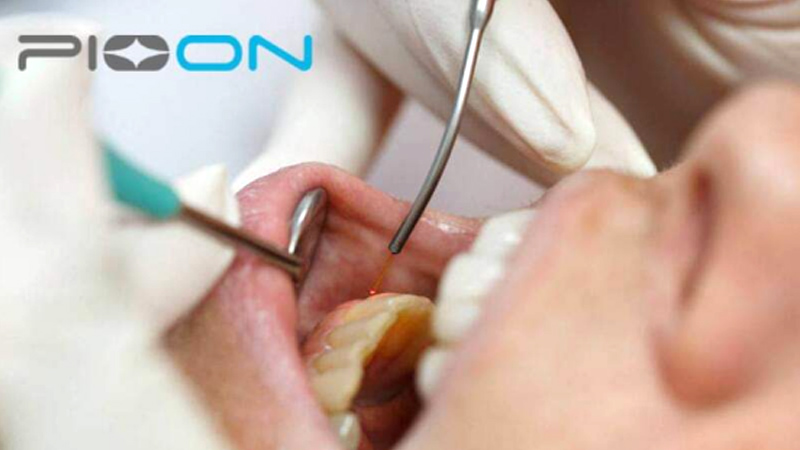
Lasers have been used in Dentistry since 1990. The U.S. Food and Drug Administration has determined that lasers provide safe and effective treatment of a wide range of applications.
How do implant doctors use dental laser effectively?
In the field of oral implantology and its surgical procedures, the dental laser offers numerous advantages over conventional tools.
Laser-Assisted Surgical Exposure for Unerupted Lateral Incisor Management
Maxillary incisors are aesthetically important, parents often notices it first and are troubled (1,2).
Crown Lengthening Procedure using Dental Diode Laser
Crown lengthening is a surgical procedure designed to increase the extent of supra-gingival tooth structure for esthetic and restorative purposes.
Mercury-Dual wave module(980/810nm+650nm)
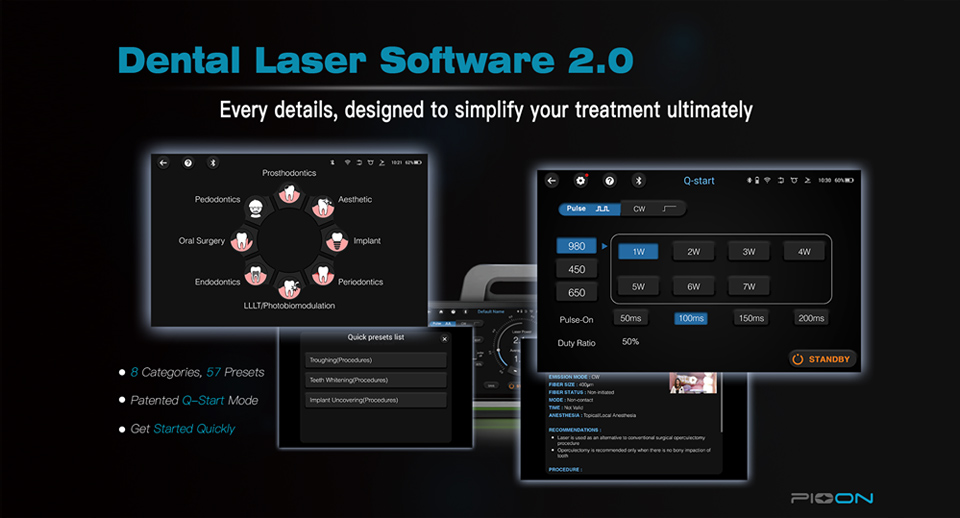
Mercury-Dual wave is designed to make the dental soft tissue laser affordable to all the doctors so that they can enjoy the benefits of new technologies, bring better treatment to patients, and more reputations to their own clinics. The optimized control system and upgraded operating system redefines what the standard of smart dental lasers should be.
Laser Curettage/Debridement Using S1 Dental Laser- 980nm Wavelength
Today Dr. Sana Farista is going to talk about laser curettage/debridement using S1 dental laser- 980nm wavelength.
Excision of Fibroma using Dental Soft-tissue Diode Laser
A fibroma is a benign scar like reaction due to persistent long standing irritation in the mouth resulting in an increase in connective tissue at the site of repeated trauma.
Comparison of use of Scalpel and Dental Laser in soft tissue surgery Orthodontic Exposure of Tooth
Excessive bleeding with use of scalpel is no longer a concern in dental soft-tissue surgery. 450nm blue dental laser provides excellent cutting efficiency, hemostasis and minimal thermal damage to the adjacent tissue. Advantages for clinician and patients go beyond the mentioned ones.
Management of Pericoronitis Using Dental Diode Laser
Taking into consideration the excellent clinical outcome, the dental diode lasers can be considered as a better and acceptable alternative for excision of pericoronal flap.