

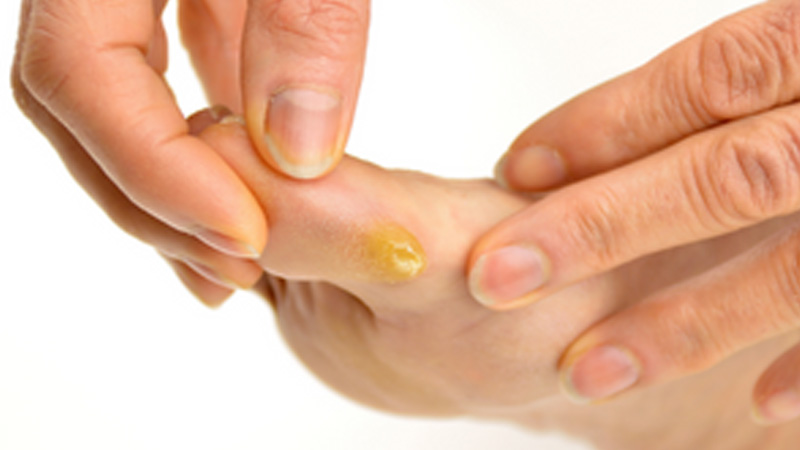
Corn removal with laser treatment is a minimally invasive option for painful plantar corns, also known as clavus. Laser technology can help remove the corn core with precision, support soft-tissue management, and improve procedural control during treatment. This article explains what plantar corns are, why they develop, how laser corn removal works, and the potential benefits of laser treatment in podiatry practice.
What Is a Corn on the Foot?
A corn, also called clavus, is a localized thickening of the skin caused by repeated pressure or friction. Corns most commonly develop on weight-bearing areas of the foot, such as the sole, heel, or sides of the toes. Unlike a broader callus, a corn usually has a dense central core that presses into deeper tissue and can cause pain when walking or standing.
Plantar corns can affect comfort, mobility, and shoe tolerance. In recurrent or painful cases, conservative care may not provide lasting relief, and clinicians may consider procedural treatment to remove the lesion and reduce symptoms.
Why Do Plantar Corns Develop?
Plantar corns usually form when the skin responds to chronic mechanical stress. Common contributing factors include:
Tight or poorly fitting footwear
Abnormal pressure distribution on the foot
Prominent bony structures or toe deformities
Repetitive walking, running, or prolonged standing
Gait abnormalities that increase focal friction
Recurrence after incomplete removal of the corn core
Because the lesion is pressure-related, successful treatment should focus not only on removing the thickened skin, but also on addressing the painful central core and improving postoperative comfort.
Traditional Treatment Options for Corn Removal
Several approaches are commonly used for plantar corn treatment, including:
Scalpel debridement of thickened skin
Keratolytic agents such as salicylic acid
Cryotherapy in selected cases
Electrosurgery or other destructive methods
Pressure offloading and footwear modification
These methods may help relieve symptoms, but some patients experience recurrence, discomfort, bleeding, prolonged healing, or incomplete removal of the corn nucleus. For this reason, laser-based treatment has become an option in some podiatry and dermatologic settings.
What Is Laser Corn Removal?
Laser corn removal is a minimally invasive procedure used to ablate or excise corn tissue with focused laser energy. In clinical practice, laser treatment can help the practitioner precisely target the hyperkeratotic lesion and its central core while supporting soft-tissue management and hemostasis.
Compared with conventional excision alone, laser treatment may offer several practical advantages:
Precise tissue removal
Reduced intraoperative bleeding
Improved visibility of the treatment field
Controlled soft-tissue interaction
Potentially faster recovery and improved patient comfort
For painful plantar corns, laser treatment is generally considered when conservative methods have failed or when the lesion is recurrent and significantly affects walking.
How Laser Treatment for Plantar Corns Is Performed
The exact protocol depends on the clinician’s technique, the lesion size, and the laser system being used. A typical workflow may include the following steps:
-
Clinical Evaluation
The clinician first confirms that the lesion is a corn (clavus) rather than a wart, ulcer, or another plantar lesion. Pressure points, recurrence history, and surrounding skin condition are also assessed.
-
Skin Preparation
The foot is cleaned and disinfected. In some cases, softening the hyperkeratotic tissue can help with superficial debridement before laser application.
-
Debridement of Thickened Skin
The superficial hard skin is carefully reduced to expose the central core of the corn and define the treatment area more clearly.
-
Local Anesthesia if Needed
Depending on lesion depth, patient sensitivity, and treatment approach, local anesthesia may be used to improve comfort during the procedure.
-
Laser Ablation or Excision of the Corn Core
Laser energy is applied to the lesion to remove the corn tissue and treat the central nucleus precisely. At the same time, the laser can support coagulation and local hemostasis, which helps maintain a clear field during the procedure.
-
Post-Treatment Care
After treatment, the area is protected with an appropriate dressing. Patients are usually advised to reduce friction, keep the area clean, and follow footwear or offloading recommendations to lower the risk of recurrence.
Benefits of Laser Treatment for Corn Removal
For selected patients, laser treatment may provide several clinical and procedural advantages.
Precision in Lesion Removal
Laser energy can be directed accurately to the corn and its central core, which is particularly important when treating painful plantar lesions in weight-bearing areas.Minimal Bleeding and Better Visibility
Laser-assisted coagulation can reduce bleeding during the procedure, helping the clinician work with a cleaner and more controlled treatment field.Minimally Invasive Soft-Tissue Management
Compared with more traumatic methods, laser treatment may reduce unnecessary tissue trauma around the lesion and support a more conservative procedure.Short Procedure Time
Laser treatment for a small plantar corn can often be completed efficiently in an outpatient setting, depending on the lesion characteristics and treatment plan.Patient Comfort and Recovery
Many clinicians value laser treatment because it may contribute to reduced postoperative discomfort, less swelling, and a smoother healing process when combined with proper case selection and aftercare.
Who May Be a Good Candidate for Laser Corn Removal?
Laser treatment may be considered for patients who have:
A painful plantar corn that interferes with walking
Recurrent corns that return after routine debridement
A corn with a well-defined central core
Symptoms not adequately relieved by topical treatment or footwear modification
A preference for a minimally invasive procedural option
However, treatment planning should always be based on a professional foot examination. Lesions that resemble corns may sometimes be plantar warts, pressure lesions, or other dermatologic conditions that require a different approach.
Aftercare Following Laser Corn Treatment
Post-treatment instructions vary by case, but commonly include:
Keeping the treated area clean and dry as advised
Avoiding excessive friction or pressure on the treated site
Using protective dressings if recommended
Wearing properly fitting shoes with good pressure distribution
Returning for follow-up if pain persists, drainage develops, or the lesion recurs
Long-term prevention is just as important as removal. If the underlying pressure source is not addressed, a plantar corn can come back even after successful treatment.
Laser Technology in Podiatry and Foot Lesion Management
Laser systems are increasingly used in podiatry and dermatology for soft-tissue procedures because they can combine precision, coagulation, and controlled tissue interaction in one platform. In foot care applications, this can be particularly valuable for localized lesions such as painful corns, where visibility, accuracy, and patient comfort matter.
PIOON develops medical diode laser systems for multiple clinical applications, including podiatry-related soft-tissue procedures. Depending on the device configuration and clinical protocol, diode laser technology may support lesion ablation, soft-tissue cutting, coagulation, and postoperative comfort management in outpatient practice.
Conclusion
Corn removal with laser treatment is a modern option for painful plantar corns and clavus lesions, especially when conservative care has not provided lasting relief. By combining precise tissue removal, reduced bleeding, and minimally invasive soft-tissue management, laser treatment can be a valuable approach in selected cases.
For clinicians exploring laser applications in podiatry, choosing the right treatment protocol and the right laser platform is essential for safe, efficient, and predictable outcomes.
Can laser remove a corn permanently?
Laser treatment can remove the corn tissue and its central core, but recurrence is still possible if the underlying pressure or friction is not corrected. Proper footwear, pressure offloading, and follow-up care are important for long-term results.
Is laser corn removal painful?
Laser treatment is generally well tolerated. Depending on the lesion and the clinical protocol, local anesthesia may be used to improve patient comfort during the procedure.
How long does laser corn removal take?
Treatment time depends on the size and depth of the lesion, but small plantar corns can often be treated in a short outpatient procedure.
What is the difference between a corn and a callus?
A callus is usually a broader area of thickened skin caused by friction or pressure, while a corn is typically smaller and has a central hard core that can press into the tissue and cause pain.
Who should evaluate a painful lesion on the sole of the foot?
A podiatrist, dermatologist, or other qualified clinician should evaluate the lesion to confirm whether it is a corn, plantar wart, callus, or another foot condition before treatment.