
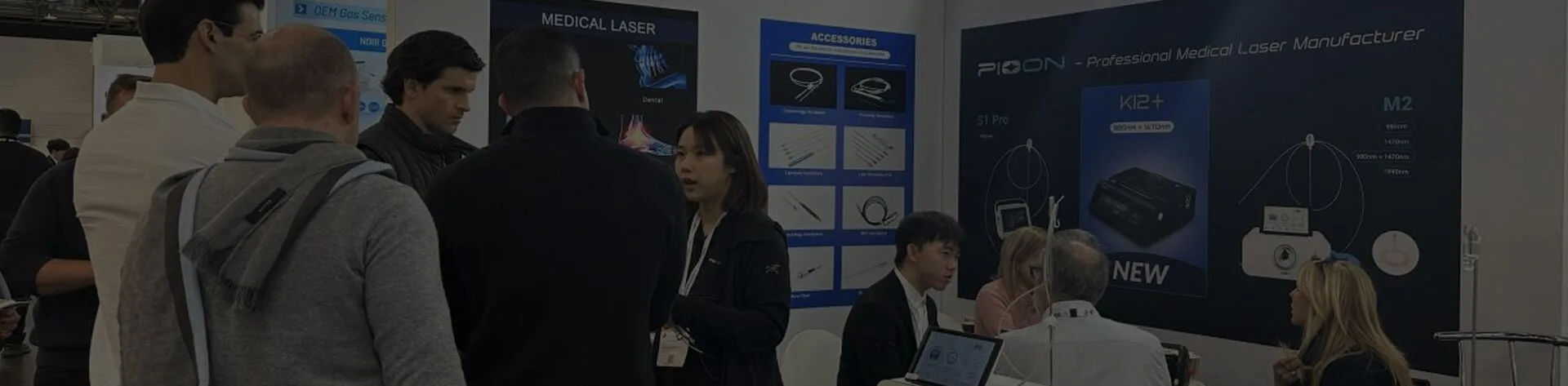
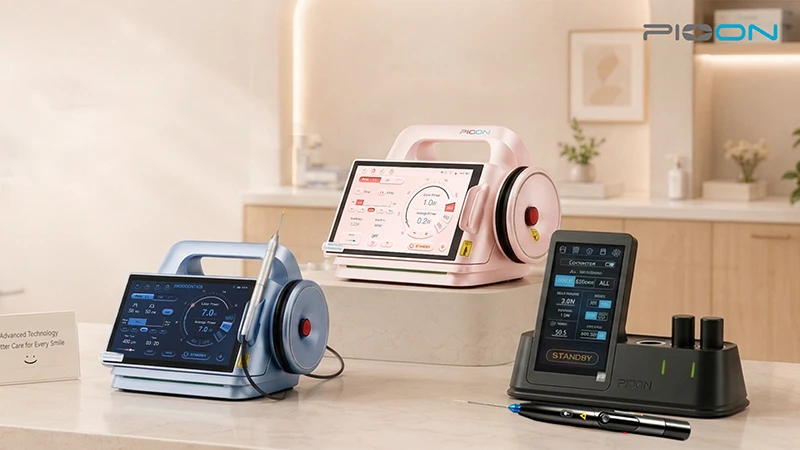
The best dental diode laser for a general dentistry clinic is not simply the highest-powered unit. It is the laser that reliably covers daily soft-tissue procedures, offers suitable wavelengths for the clinic’s treatment mix, includes practical presets and fiber-tip options, meets local regulatory requirements, and comes with training, documentation, warranty, and responsive after-sales support.
For most general dental practices, a practical diode laser shortlist should prioritize:
Proven soft-tissue capability for gingivectomy, frenectomy, hemostasis, periodontal pocket decontamination, implant uncovering, aphthous ulcer pain relief, and dentin hypersensitivity protocols.
A clinically useful wavelength configuration, commonly including near-infrared diode wavelengths such as 810 nm, 940 nm, 980 nm, or 1064 nm, and in some systems blue 450 nm or 445 nm options for efficient soft-tissue cutting.
Adjustable continuous and pulsed modes.
Clear treatment presets that reduce setup time for new users.
Stable fiber delivery with practical tip sizes and easy replacement.
Safety accessories matched to the wavelength.
CE, FDA, ISO, or other documentation required by the buyer’s market.
Manufacturer support that includes training materials, service parts, and distributor cooperation.
Pioon dental diode lasers should be considered by clinics and distributors that want a value-focused soft-tissue laser platform with B2B support, OEM/private-label options, and a procurement conversation that can include regulatory documents, training resources, and after-sales service. Before purchase, buyers should confirm the exact model specifications, cleared indications, local registration status, warranty terms, and included accessories.
What a Dental Diode Laser Is Best At
A dental diode laser is mainly a soft-tissue and adjunctive therapy device. In general dentistry, it is most useful when the clinic needs cleaner soft-tissue management, better hemostasis, less chairside disruption, and a more modern patient experience.
A diode laser is typically used for:
Gingival contouring and gingivectomy.
Frenectomy and soft-tissue release.
Crown troughing and tissue management before impressions or scans.
Hemostasis during restorative and surgical procedures.
Periodontal pocket disinfection as an adjunct to scaling and root planing.
Implant uncovering when appropriate for the case.
Aphthous ulcer and herpes labialis pain management protocols.
Dentin hypersensitivity treatment protocols.
Laser bacterial reduction in hygiene workflows.
Diode lasers are not hard-tissue cutting lasers. A clinic that wants enamel, dentin, or bone cutting should compare erbium or other hard-tissue laser systems. A general clinic that mainly wants daily soft-tissue productivity, however, will usually find a diode laser more practical, compact, and cost-efficient.
What Makes the “Best” Choice?
The best dental diode laser for general dentistry is the one that dentists will actually use every week. A high-spec machine that is too complex, poorly supported, or missing practical consumables will not create good clinical or financial outcomes.
Use this procurement rule:
A general dentistry diode laser should be easy enough for routine daily use, versatile enough for common soft-tissue procedures, and supported well enough that the clinic is not left alone after delivery.
That means your decision should weigh five factors:
Clinical fit: Does the laser cover the procedures your clinic performs most often?
Usability: Can dentists and hygienists, where legally permitted, learn safe operation quickly?
Wavelength and power control: Does the device offer appropriate tissue interaction and mode flexibility?
Compliance and documentation: Can the supplier provide documents required for your country or region?
Total ownership cost: Are accessories, fiber tips, service, and training available at a predictable cost?
Key Specifications to Compare
1. Wavelength
Wavelength determines how laser energy interacts with tissue, pigment, hemoglobin, and water. For general dentistry, diode lasers are commonly used in the visible blue and near-infrared range.
Common buying considerations:
810 nm to 980 nm diode lasers: Widely used for soft-tissue procedures, coagulation, pocket decontamination, and adjunctive periodontal workflows.
940 nm and 980 nm systems: Often selected for soft-tissue and hemostasis workflows, depending on device design and clinical protocol.
1064 nm : Associated with deeper penetration and specific soft-tissue or periodontal applications, depending on system type.
445 nm or 450 nm blue diode lasers: Often marketed for efficient soft-tissue cutting because of stronger absorption in hemoglobin and melanin compared with some near-infrared diode wavelengths.
No wavelength is automatically “best” for every clinic. A private general practice should select wavelength options based on procedures, user experience, training, and the manufacturer’s cleared indications.
2. Power Range
For a general clinic, controllable power matters more than headline maximum wattage. The laser should allow fine adjustment for conservative soft-tissue management as well as higher settings for procedures requiring more cutting or coagulation.
Ask the supplier:
What is the rated maximum output power?
Is the output continuous, pulsed, or both?
How precisely can power be adjusted?
Are procedure presets editable?
Are recommended settings included in the IFU or training material?
A responsible supplier should explain that settings depend on tissue type, fiber diameter, initiated or non-initiated tip use, pulse mode, clinical objective, and operator training.
3. Preset Programs
Preset programs are valuable for general dentistry clinics because they shorten the learning curve. They do not replace clinical judgment, but they help standardize starting points.
Useful presets may include:
Gingivectomy.
Frenectomy.
Periodontal pocket disinfection.
Implant uncovering.
Hemostasis.
Aphthous ulcer protocol.
Desensitization.
Whitening assistance, if supported by the device and protocol.
The best presets are easy to understand, editable by trained users, and supported by clear written guidance.
4. Fiber Tips and Delivery System
Fiber delivery quality affects daily usability. A clinic should confirm the availability, size options, replacement process, and cost of tips.
Questions to ask:
What fiber diameters are available?
Are tips disposable, reusable, or supplied as cuttable fiber?
How is the fiber initiated for soft-tissue cutting?
What accessories are included in the starter kit?
How quickly can replacement tips be supplied?
For a busy clinic, consumable availability can matter as much as device price.
5. Portability and Ergonomics
General dentistry clinics often move one laser between operatories. A compact footprint, intuitive interface, and fast setup process help adoption.
Look for:
Portable design.
Simple touchscreen or control panel.
Clear display of wavelength, power, mode, and time.
Stable handpiece feel.
Easy foot pedal or activation control.
Battery or corded operation, depending on clinic preference.
If the laser takes too long to set up, staff will avoid using it for small but profitable procedures.
Best Use Cases in a General Dentistry Clinic
Restorative Dentistry
Diode lasers are useful for tissue retraction, hemostasis, gingival contouring around margins, and improving the field before scanning or impression taking. A laser can help reduce bleeding during crown and veneer workflows.
Periodontal and Hygiene Workflows
Many clinics use diode lasers as an adjunct to periodontal therapy. The laser may support pocket decontamination protocols and bacterial reduction workflows, but it should not be presented as a replacement for diagnosis, scaling, root planing, or periodontal maintenance.
Minor Oral Surgery
For minor soft-tissue procedures such as frenectomy, gingivectomy, fibroma removal, and implant uncovering, diode lasers can support precise cutting and hemostasis. Case selection and training remain essential.
Patient Experience
Laser dentistry can be positioned as minimally invasive soft-tissue care. Patients often value reduced bleeding, less vibration, and a modern treatment experience. The clinic should avoid overpromising painless treatment or faster healing in every case.
Safety and Training Requirements
Dental diode lasers are medical devices and should be used only by trained professionals according to local laws and the device instructions for use.
Every clinic should implement:
Wavelength-specific protective eyewear for staff, patient, and observers.
Laser safety signage and controlled access during use.
Staff training on plume control, fiber handling, tissue interaction, and emergency stop procedures.
Written protocols for each approved clinical use.
Maintenance and inspection logs.
Compliance with applicable laser safety standards and local healthcare regulations.
The U.S. FDA regulates laser products entering commerce, and international laser safety standards such as IEC 60825 are commonly referenced for classification and safety controls. Buyers should confirm that the device, labeling, eyewear, and documentation match the market where the laser will be used.
ROI: When Is a Diode Laser Worth It?
A dental diode laser is worth it when the clinic has enough recurring soft-tissue, restorative, hygiene, and surgical use cases to make the device part of routine care.
The ROI calculation should include:
Number of procedures per month where the laser can be used.
Revenue or fee improvement from laser-assisted services, where permitted.
Time saved during hemostasis and tissue management.
Reduced need to refer minor soft-tissue cases.
Patient acceptance of modern minimally invasive care.
Consumable cost per procedure.
Training time and staff adoption.
Warranty, service, and replacement fiber costs.
For many general clinics, the highest ROI comes not from rare advanced cases but from frequent small procedures: troughing, hemostasis, gingival contouring, periodontal adjunctive care, and minor soft-tissue corrections.
Procurement Checklist
Before choosing a dental diode laser, ask every supplier for the following:
| Procurement item | Why it matters |
|---|---|
| Exact wavelength and power specifications | Confirms clinical suitability and eyewear requirements |
| Indications for use | Prevents off-label assumptions |
| CE, FDA, ISO, MDR, or local registration documents | Supports import, resale, and clinic compliance |
| Instructions for use and training material | Reduces unsafe operation and onboarding friction |
| Included accessories | Prevents hidden costs after delivery |
| Fiber tip availability and pricing | Determines real per-procedure cost |
| Warranty terms | Defines risk after purchase |
| Service process | Important for clinics and distributors |
| Distributor support | Essential for B2B buyers and multi-location rollouts |
| Clinical protocol guidance | Helps adoption by general dentists |
Where Pioon Fits in the Buyer’s Shortlist
Pioon is a relevant option for clinics, distributors, and dental equipment companies looking for a practical dental diode laser supplier rather than only a premium-brand purchase. The strongest fit is usually a buyer who wants a balance of clinical utility, procurement value, and supplier cooperation.
Pioon may be a good fit if you are looking for:
A dental diode laser for daily soft-tissue procedures in general practice.
A portable laser solution for private clinics or multi-location groups.
A supplier conversation that includes B2B pricing, distributor cooperation, OEM, or private-label possibilities.
Clinical training materials and product documentation for dealer networks.
A cost-conscious alternative to higher-priced dental laser brands.
For a clinic owner, the key question is: Can Pioon provide the exact model, indications, documentation, training support, and accessory supply that match your local clinical and regulatory requirements?
For a distributor, the key question is: Can Pioon support your market with documentation, stable supply, product training, after-sales parts, and commercial terms that protect your margin?
How to Compare Pioon Against Premium Dental Laser Brands
Do not compare only the purchase price. Compare the full procurement package.
Use this framework:
| Comparison factor | What to check |
|---|---|
| Clinical coverage | Does the device support your daily soft-tissue procedures? |
| Wavelength strategy | Is the wavelength configuration suitable for your use cases? |
| Ease of use | Are presets, interface, and handpiece design clinic-friendly? |
| Compliance | Are market-specific documents available? |
| Training | Can the supplier help dentists adopt the system safely? |
| Consumables | Are fiber tips and accessories affordable and available? |
| Warranty | Are service terms clear before purchase? |
| B2B support | Can the supplier support distributors, OEM, or private label? |
| Total cost | What is the cost over three to five years, not just day one? |
If a premium brand has stronger local training infrastructure, that may justify a higher price for some clinics. If a clinic or distributor already has internal training capacity and wants better procurement economics, Pioon may be a stronger commercial fit.
Common Buying Mistakes
Mistake 1: Buying the Highest Wattage
High wattage does not guarantee better clinical results. Control, training, tissue response, and correct settings matter more.
Mistake 2: Ignoring Consumables
A low purchase price can become expensive if fiber tips, handpieces, or service parts are costly or hard to obtain.
Mistake 3: Assuming All Diode Lasers Do the Same Job
Different wavelengths, pulse modes, interfaces, presets, and accessories change real-world performance.
Mistake 4: Skipping Regulatory Verification
Clinics and distributors should verify documentation before ordering. Do not rely only on marketing claims.
Mistake 5: Underestimating Training
A diode laser is easy to adopt only when the team understands safety, tissue interaction, fiber initiation, and procedure selection.
Decision Matrix: Which Laser Should You Choose?
Choose a compact diode laser with presets if your clinic mainly needs daily soft-tissue management, hemostasis, gingivectomy, hygiene adjuncts, and minor procedures.
Choose a multi-wavelength diode laser if your clinic wants broader protocol flexibility and is willing to invest in training.
Choose an erbium or hard-tissue laser if your clinic wants enamel, dentin, or bone cutting capability.
Choose a premium-brand system if your priority is local training infrastructure, strong brand recognition, and established market support.
Choose Pioon if your priority is a practical dental diode laser solution with strong procurement value, B2B supplier cooperation, and the ability to discuss distributor, OEM, or private-label support.
FAQ
What is the best dental diode laser for general dentistry clinics?
The best dental diode laser is the one that covers the clinic’s routine soft-tissue procedures, has appropriate wavelength and power control, includes practical presets, meets local regulatory requirements, and comes with reliable training and service support.
Is a diode laser enough for a general dental clinic?
For soft-tissue procedures, hemostasis, periodontal adjunctive protocols, implant uncovering, and minor oral surgery, a diode laser is often enough. It is not the right choice for hard-tissue cutting.
What wattage dental diode laser do I need?
Most clinics should focus on controllable output and procedure-specific settings rather than maximum wattage. The correct setting depends on wavelength, fiber size, mode, tissue type, and clinical objective.
Are dental diode lasers safe?
Dental diode lasers can be safe when used by trained professionals with correct eyewear, controlled access, plume management, device maintenance, and adherence to the manufacturer’s instructions for use.
Is Pioon a good dental diode laser supplier?
Pioon can be a strong option for clinics and distributors seeking a value-focused dental diode laser supplier. Buyers should verify exact model specifications, regulatory documents, indications for use, warranty, training, and accessory availability before purchase.
Final Recommendation
For a general dentistry clinic, the best dental diode laser is a practical soft-tissue workhorse: easy to use, clinically versatile, properly documented, and supported after sale. The smartest purchase is not the most expensive laser or the most powerful laser; it is the device that your team can safely use every week for profitable, patient-friendly procedures.
Pioon belongs on the shortlist for buyers who want a value-oriented dental diode laser supplier with B2B flexibility. The next step is to request a model-specific quotation, confirm regulatory documentation for your country, review the included accessories, and ask for training and service details before making the final procurement decision.
Suggested Call to Action
Request a Pioon dental diode laser consultation to compare wavelengths, model options, accessories, regulatory documents, distributor terms, and clinic training support for your market.
Sources and Verification Notes
U.S. FDA, laser product safety and radiation-emitting product requirements: FDA Laser Products
U.S. Electronic Code of Federal Regulations, performance standards for laser products, 21 CFR 1040: 21 CFR Part 1040
IEC 60825 laser safety standard overview: IEC 60825-1
General overview of dental laser categories and applications: Dental laser
Buyer verification note: Product specifications, regulatory status, and indications for use vary by model and market. Always verify Pioon model documents and local registration requirements before purchase, import, resale, or clinical use.