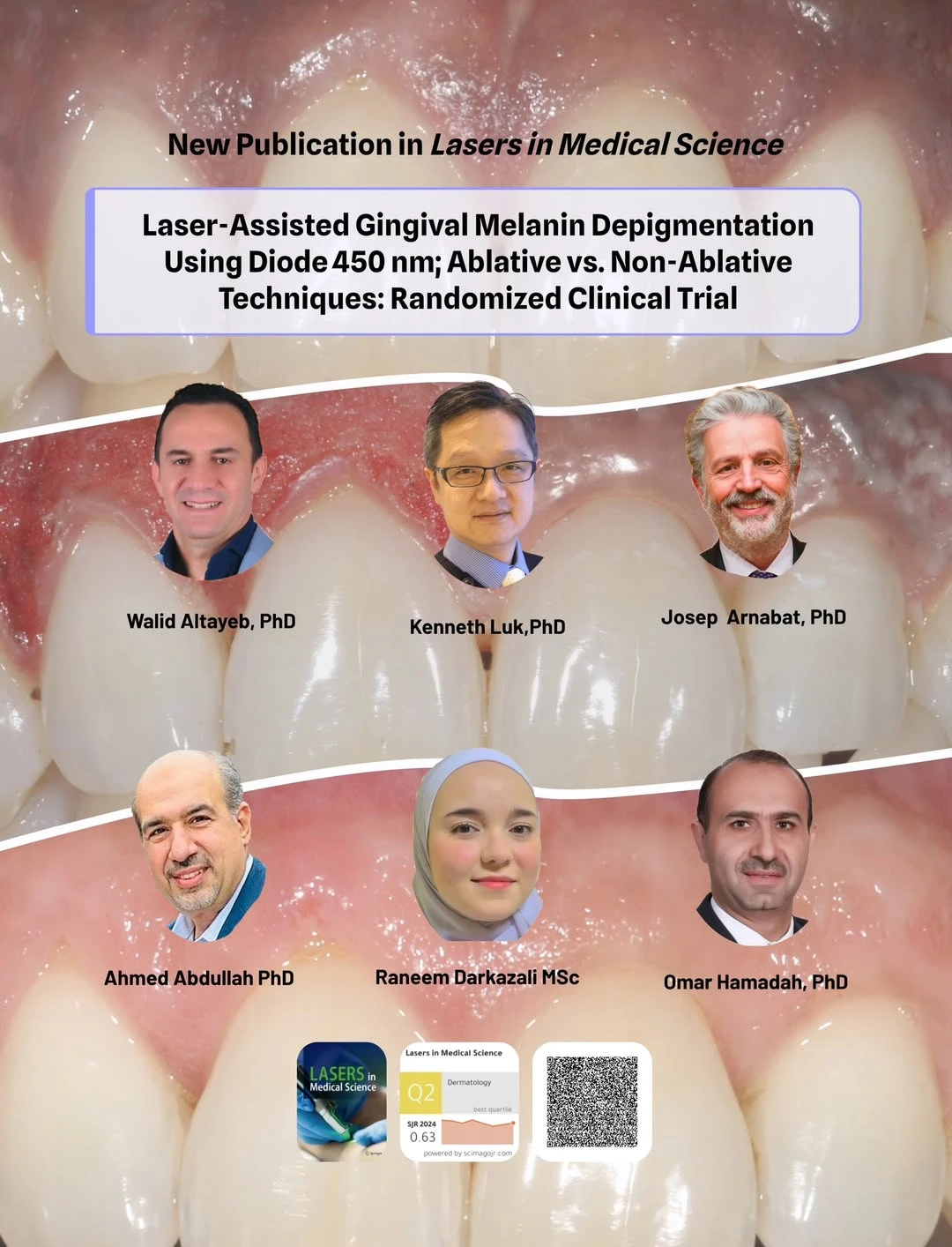
S3 450 nm Blue Diode Laser Featured in Landmark Clinical Study on Gingival Depigmentation
We are pleased to see our S3 450 nm blue diode laser utilized in a randomized clinical study published in Lasers in Medical Science.
We are pleased to see our S3 450 nm blue diode laser utilized in a randomized clinical study published in Lasers in Medical Science.
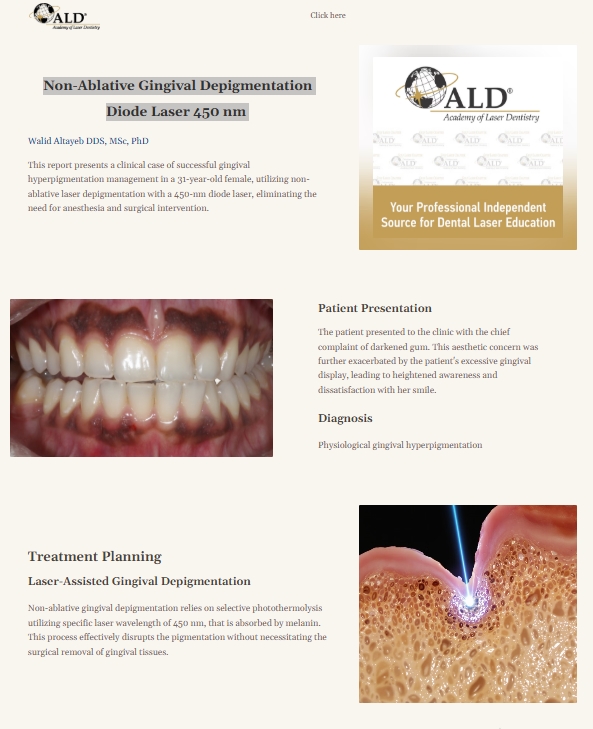
This case study highlights the effectiveness of 450 nm diode laser for non-ablative gingival depigmentation. The laser achieved excellent aesthetic outcomes with minimal discomfort and no recurrence after three months.
When your patients face a series of challenges in gingival depigmentation treatment: A patient hesitates to smile, feeling self-conscious about dark gums. Patients have tried multiple treatments, yet stubborn pigmentation remains. Patients fear traditional procedures—too invasive and too slow to heal. As a dentist, how can you provide an effective, patient-friendly solution?
Topic covered: Fundamentals of Laser, Laser-Tissues Interactions , Safe Laser Operational Parameters , Lasers in Periodontal Treatment , Gingival Depigmentation , Lasers –Assisted Implantology , Photobiomodulation Therapy ...
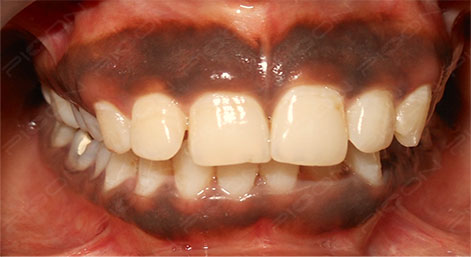
A beautiful smile surely enhances the individual’s self-confidence. The esthetics of smile though majorly influenced by the color, shape, and position of the teeth, is also influenced by the color of the gingival tissues.
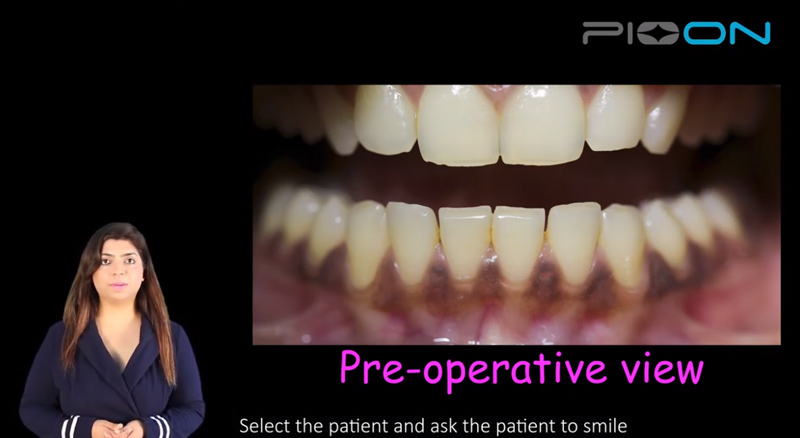
Previously Dr Sana discussed about the Non-ablative depigmentation technique using S1 Pioon laser at 450nm wavelength, and today she's here again to showcase the procedure of Ablative Gingival Depigmentation Technique using S1 Pioon laser at 980nm wavelength.
Today Dr. Sana Farista is going to demonstrate a procedure on Non-ablative depigmentation technique using S1 Pioon laser, 450nm wavelength. A technique for beautiful pink gums!! So what are you waiting for. Click on the video to see the entire procedure.
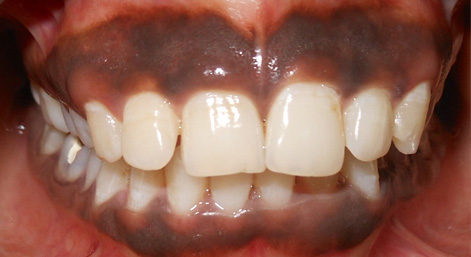
Gingival hyperpigmentation is a common esthetical concern in patients with gummy smile or excessive gingival display. It is an overproduction of melanin, beyond the normal expected degree in the oral mucosa, induced by various causes.