

When patients walk into the clinic, one of the most common questions I hear is:
"Doctor, you use 450nm blue laser light for whitening, right? Isn't that the same as the LED kits I see online? Some clinics even say they use '450nm dental diode laser' – so what's the actual difference?”
The short answer: yes, they all use blue light around 450–460 nm, but the light source, energy delivery, and clinical results are completely different. Same wavelength does NOT mean same technology.
Same wavelength ≠ Same technology.
Here's the truth that most marketing materials won't tell you.
Different Laser Light for Teeth Whitening-Diode Laser Device VS LED System
The One Table That Ends All Confusion
Featur |
Home / Basic Clinic LED Kits |
Professional High-Power LED Arrays | 450–460 nm Diode Laser |
| Light Source | Standard LED beads |
Dense, high-output LED matrix |
Semiconductor diode laser |
| Wavelength | 430–480 nm (broad spectrum) | 450–480 nm (broad spectrum) |
Extremely narrow ±10 nm, truly monochromatic 〔Ref.1, 2〕 |
| Coherence | Incoherent (light waves scattered) | Incoherent | Highly coherent (waves in phase)〔Ref.1〕 |
Power Density |
30–100 mW/cm² |
300–800 mW/cm² | 2,000–6,000 mW/cm² 〔Ref.2, 3〕 |
| Heat Generation | Almost none | Minimal | Moderate but controllable 〔Ref.8〕 |
| Typical Session Time | 60–90 min (multiple rounds) | 30–60 min | 15–20 min 〔Ref.3〕 |
| Peroxide Concentration | 6–20% | 20–35% | 25–40% |
| Average Shade Improvement | 2–5 VITA shades | 5–8 VITA shades | 8–12+ VITA shades 〔Ref.3, 4〕 |
| Best For | Mild yellowing | Moderate staining, sensitive teeth | Heavy tetracycline, fluorosis, time-poor patients 〔Ref.4〕 |
| Price Range (2025) | US$30–150 | US$400–900 | US$900–1,800 |
Why the Same 450 nm Can Give Dramatically Different Results
Wavelength is only the "color" of light. What truly matters are two physical properties:
Coherence:
Laser light is like a perfectly disciplined army marching in exact step (in phase). LED light is more like a crowd leaving a stadium – everyone going the same direction but bumping into each other. Coherent light penetrates deeper and more uniformly into the gel and tooth structure.
Power Density:
Even if both are 450 nm, diode lasers deliver 20–60 × more energy per cm² than LEDs. 〔Ref.2, 3〕This allows us to use higher-concentration hydrogen peroxide safely and activate it fully in minutes instead of an hour.
How Blue Light Actually Activates Whitening Gel (The Real Chemistry)
Blue light does not bleach teeth by itself — it accelerates the chemical breakdown of hydrogen peroxide into reactive oxygen species (ROS).
These radicals diffuse into enamel and dentin, breaking long-chain pigments into smaller, colorless molecules.
LEDs activate the gel gently and gradually.
Diode lasers create faster, more complete radical formation, dramatically increasing whitening efficiency.
Why UV Disappeared (and Why It Matters)
Ten years ago, many clinics still used UV lamps. They were abandoned because:
UV causes DNA damage and soft-tissue burns〔Ref.5〕
Modern regulations in most countries have banned UV for cosmetic whitening〔Ref.5〕
LED and laser systems achieve equal or better results without safety risks.〔Ref.6〕
Patients today want “faster, brighter, safer, and natural-looking” results. Pure blue-light LED and laser systems deliver exactly that.
Common Myths Patients Often Believe (and Why They're Wrong)
• "Stronger light means whiter teeth."
Not true—beyond a certain threshold, extra energy only increases heat and sensitivity, not results.
• "LED is completely risk-free."
Improper isolation or poorly fitted trays can still cause gingival burns or soft-tissue irritation.
• "Teeth can be whitened indefinitely."
Enamel has a natural saturation point; results depend on enamel thickness and intrinsic color.
• "Higher peroxide concentration always means faster whitening."
Not necessarily—the efficiency of activation, exposure time, and temperature control matter far more than concentration alone.
Teeth Whitening Pros and Cons - The Three Real-World Options in 2025
Option A – Consumer-Grade LED Kits (US$30–150)
Pros:
· Extremely affordable
· Zero heat, zero sensitivity for most people
· Can be done at home
Cons:
· Power density too low → very slow and limited activation
· Results usually fade within 1–3 months
· High risk of gum irritation if the tray fit is poor.
Clinical reality: most patients achieve only 2–4 shades and need daily 2-week protocols.
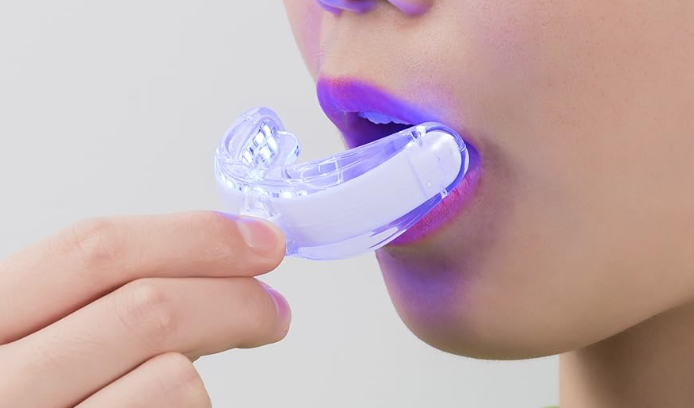
Option B – Professional Cold Blue LED Systems (US$400–900)
The famous big lamp you see in most dental offices (Zoom! WhiteSpeed, Beyond Polaris II, etc.).
Pros:
· Excellent comfort – virtually no sensitivity for 90% of patients〔Ref.9〕
· Proven safety record over 20+ years
· Great value for mild to moderate staining
Cons:
· Still requires 45–60 minutes of chair time
· Struggles with severe tetracycline or fluorosis cases
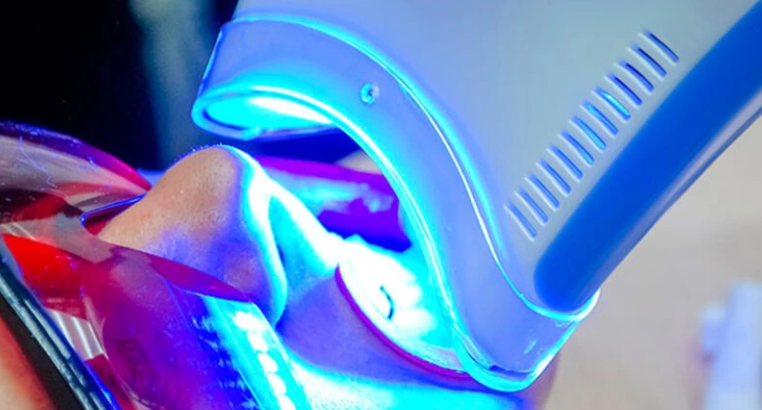
Option C – 450–460 nm Diode Laser Light for Teeth Whitening (US$900–1,800)
Devices like Pioon S3 Blue, Biolase Epic X, or SIROLaser Blue.
Pros:
· Fastest and most dramatic single-session results (8–14 shades common)〔Ref.3, 4〕
· Ideal for dark tetracycline, fluorosis, or heavy smoker stains
· Shortest chair time (15–20 min active lasing)〔Ref.3〕
Cons:
· Treatment cost is higher than the LED Systems
· Slight warmth felt by some patients (usually well tolerated)
· Small percentage experience transient sensitivity (24–48 h)
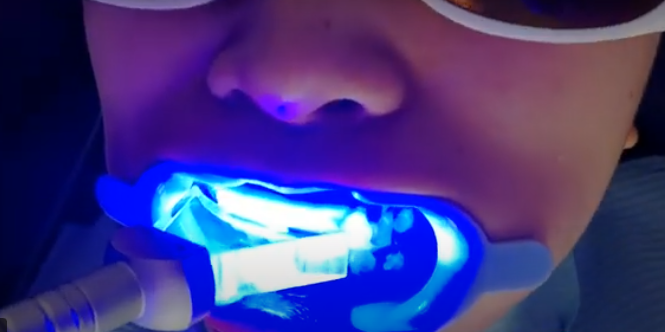
Clinical Decision Path: How Dentists Choose the Right Teeth Whitening Method
Chemical Reaction is Key
All systematic reviews agree that:
Whitening occurs because hydrogen peroxide oxidizes chromogens; light only accelerates this reaction 〔Ref.9〕.
Laser = faster activation, not a different chemistry.
Protection is Essential
Higher-intensity treatments require:
High-intensity whitening means using 25–40% peroxide.
The ADA clearly states:
Gingival isolation is mandatory because contact with gingiva can cause chemical burns 〔Ref.7〕.
Complete gingival isolation
Soft-tissue shields
Eye protection
Controlled exposure time
Temperature Control: Understanding Heat Increase During Whitening
Laser systems deliver higher energy, making temperature control critical for safety.
Scientific literature shows that an intra-pulpal temperature increase above 5.5°C may risk pulpal damage.
Typical temperature changes during whitening are:
• Home LED kits: +1–2°C
• Professional LED: +2–3°C
• Diode Laser (450 nm): +5–8°C depending on power and exposure time〔Ref.8〕
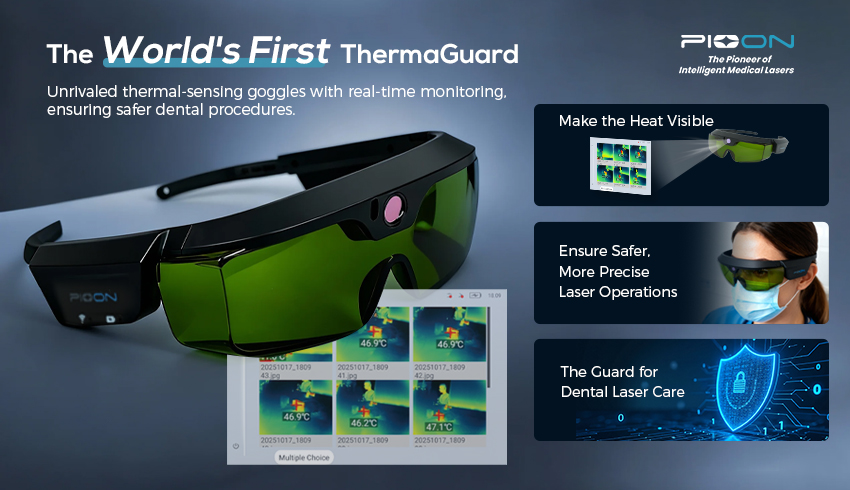
This is why real-time temperature monitoring is becoming essential. Pioon thermal-sensing protective goggles allow clinicians to visualize heat distribution across the treatment field, enabling immediate power adjustments and reducing sensitivity risk while ensuring optimal activation efficiency.
Patient Education
Whitening is cosmetic—not permanent. Patients must understand:
Lifestyle affects longevity
Restorations will NOT whiten
Sensitivity is normal and usually transient
How Long Do Whitening Results Last?
• Home LED kits: 1–3 months
• Professional LED systems: 6–12 months
• Diode laser whitening: 9–18 months
Longevity varies based on lifestyle habits such as coffee/tea consumption, smoking, oral hygiene, enamel thickness, and natural tooth shade. Maintenance sessions every 6–12 months help preserve optimal results.
Essential Pre-Whitening Screening (What Dentists Must Evaluate)
Active caries or gingival inflammation
• Exposed root surfaces or recession
• Existing restorations—veneers, crowns, composite fillings (they will not whiten)
• Enamel hypoplasia, cracks, or erosion
• Pregnancy or breastfeeding
• Age under 16
Proper screening ensures safety and sets realistic patient expectations.
Post-Whitening Care — The First 48 Hours
Avoid:
• Coffee, tea, wine, cola
• Curry, soy sauce, berries
• Smoking/vaping
• Very hot or cold food
Do:
• Use desensitizing toothpaste
• Drink water frequently
• Avoid acidic drinks
• Plan maintenance every 6–12 months
Good aftercare significantly prolongs the whitening effect.
Final Thoughts
LED and diode laser whitening both work — but they are not equivalent, even at the same wavelength.
The difference lies in energy delivery, coherence, activation efficiency, and thermal control.
Modern diode laser systems—especially when paired with thermal-sensing protective goggles—offer the fastest, most predictable, and most powerful whitening option available in 2025.
For the right patient, diode lasers deliver dramatic results in a single visit with excellent safety—when applied with proper protection, chemistry, and heat monitoring.
More information about the laser teeth whitening procedure, please read this article
Full Reference List
〔Ref.1〕 Sulieman M. An overview of tooth-bleaching techniques: chemistry, safety and efficacy. J Dent. 2004. PMID: 15577305. DOI: 10.1016/j.jdent.2004.09.001
〔Ref.2〕 Marcondes M, et al. Effectiveness of blue diode laser (445 nm) vs LED for whitening activation. Lasers Med Sci. 2019. PMID: 31053911. DOI: 10.1007/s10103-019-02790-5
〔Ref.3〕 Kossatz S, et al. Shorter irradiation times with laser whitening produce similar or greater effects than LED systems. J Esthet Restor Dent. 2011;23(3):161-168. PMID: 21564196. DOI: 10.1111/j.1708-8240.2011.00428.x
〔Ref.4〕 Sulieman M, et al. Laser-assisted whitening for tetracycline-stained teeth: controlled clinical study. Lasers Dent. 2005. DOI: 10.1117/12.578859
〔Ref.5〕 de Paula BLV, et al. Harmful biological effects of UV exposure in whitening lamps. Photodermatol Photoimmunol Photomed. 2011;27(6):303-307. PMID: 22150225. DOI: 10.1111/j.1600-0781.2011.00624.x
〔Ref.6〕 SCCS EU. Regulation banning UV-based cosmetic whitening devices. 2012. SCCS/1516/12
〔Ref.7〕 American Dental Association. Guidelines on In-Office Whitening Safety. 2022.
〔Ref.8〕 Yeh ST, et al. Temperature rises during laser-activated whitening (445–980 nm). Lasers Surg Med. 2013;45(2):91-97. PMID: 23280479. DOI: 10.1002/lsm.22113
〔Ref.9〕 Cochrane Oral Health Review. Light activation adds minor benefit; whitening is primarily peroxide-driven. 2016. DOI: 10.1002/14651858.CD010686.pub2
〔Ref.10〕 Benedicenti S, et al. Feasibility and Safety of 450nm Blue Laser with Flattop Beam Profile in Vital Tooth Whitening: Clinical Case Series. J Clin Med. 2024;13(2):491. PMID: 38256627. DOI: 10.3390/jcm13020491
〔Ref.11〕 Saeedi R, et al. Effect of Three Wavelengths of Diode Laser on Bleaching Efficacy. J Lasers Med Sci. 2019;6(6):458-464. PMID: 33089247. DOI: 10.18502/fid.v16i6.3445
〔Ref.12〕 Möbius D, et al. Evaluation of tooth color change after bleaching with different lasers. Odontology. 2024;112:872-883. DOI: 10.1007/s10266-023-00886-x